The Gist: A Denial Of Service Attack
The fuel blockade demonstrated state fragility and inability. This is the Gist.


The Lorrymen got lucky. Almost everything that could have gone right for their wildcat blockages of Dublin and oil depots at major ports, went right. The Garda Commissioner was on his holidays. The Minister for Justice multiplied their support by making empty threats that just angered their participants, bringing more of them out. It didn't rain, mostly, so that those participants didn't have the excitement of taking action undermined by being cold and wet.
But the fact that these little strokes of luck were enough to threaten Ireland's economic activities- deliveries, transport, commuting, heating- revealed just how fragile that system was. And the political and policing reactions to it also revealed just how unprepared the state bodies were to respond to them.
Speak loudly and hit yourself with a stick
The irony of Jim O’Callaghan citing calling the army in to break up a protest fronted by the people whose racism he has been assiduously courting and pandering to since taking office was only topped by the fact that, in his rush to have his name appear in the media beside the big story of the day, he did it before the army had heard about it. And then to have the threat backfire, and increase the attendance at the oil depots of protestors, so that a senior Garda was quoted as saying “This is against the backdrop of political announcements of 'bringing in the Army', which did not help matters at all.”
Announcing a plan to the media to sound tough, without doing the needed prep, and then that plan makes everything worse? Perhaps the most Jim O’Callaghan move ever.
We're No.1, why try harder?
The Irish State functions under a number of unstated presumptions. One of those is that everything is basically correct and as it should be. Systemic change is inherently bad, because anything that moves us from the status quo is to be treated as a fall from grace. If something has to happen, the machinery of decision making will always stress it is only a temporary measure, and promise that the status quo ante will be returned to as quickly as possible. When the same parties are in power for decade after decade, they have to justify their previous decisions by constantly asserting that, thanks to their wise and endless governance, all is for the best in this, the best of all possible worlds.
So the USC was introduced as a temporary tax in 2011 (despite being part of the need to catch more types of earners in the tax net). Or, every year, the Minister for Social Protection 'decides' to issue a one-off double payment for Christmas, like Scrooge delivering a goose to Tiny Tim. Or the widespread ability to work from home is talked about as just a COVID blip. And so on.
But this impulse to deny any need for systemic change means that the state has terrible trouble in delivering even the change it officially recognises it does need. Our climate plans were delivered as a series of impossible promises based on outlandish presumptions. We wouldn't change how agriculture emits greenhouse gases (GHGs) proportionately to their contribution. So , instead, we produced a plan where the maths only work if the number of fully electric vehicles on the road goes from about 100,000 at the end of 2025 (excluding non-plugin hybrids) to 800,000 by 2030.
The state is happy to assert it can achieve incredible and unprecedented feats of change, later, while always arguing that it can't so much as buy a new pair of shoes right now. It will promise any amount of jam tomorrow to avoid actually implementing structural changes in the real world of today.
Do nothing, and be quick about it
So it was that we spent the years from 2019's publication of the "Climate Action Plan to tackle climate breakdown" to 2022 without ever setting up, for example, the agency for approving offshore wind farms. And, even if they were approved, there still isn't a port in the Republic of Ireland that could be used to install them. Cork is hoping to have the capacity by 2030- which is when the Action Plan says we will be generating 55% of all our power from renewables.
There isn't even the regulation to let you buy a €250 DIY-kit of solar panels, stick them on your apartment balcony and then plug them in yourself to a socket, offsetting your electricity usage. It's huge in Germany. We just haven't done the admin to let it happen.
The CSO doesn't sugarcoat what all this has meant for the reality of Ireland's exposure to global fossil fuel price shocks. "In 2023, renewable energy made up just 5.8% of Ireland’s total final energy consumption - the third lowest percentage among all EU-27 Member States....Ireland therefore stood out for its heavy reliance on oil (all of which is imported) and low adoption of renewable energy compared to other EU countries."
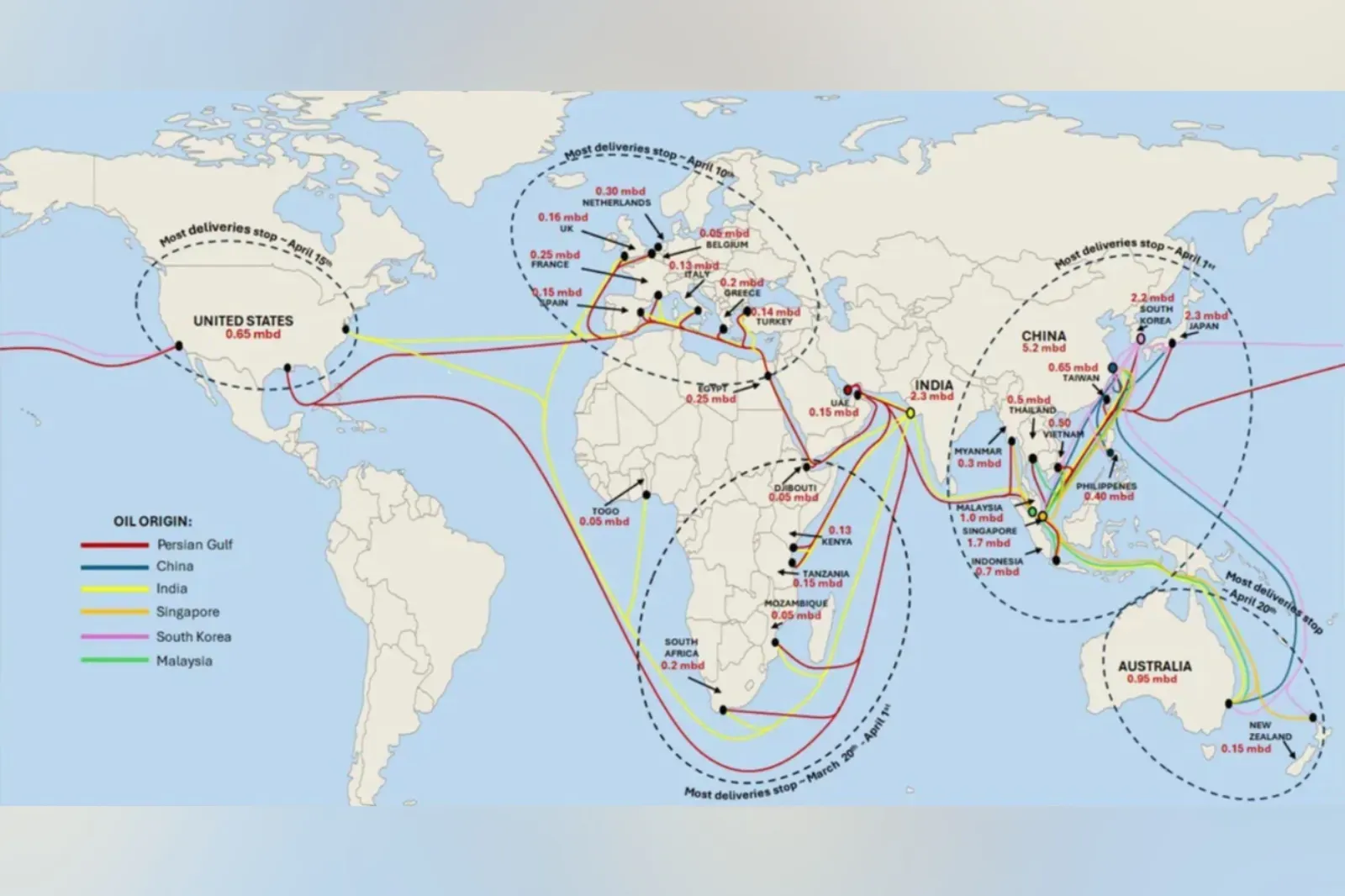
When the Lorrymen rumbled down O'Connell Street this week, it was against this background of a nation still largely addicted to burning oil to travel, to heat homes and for commercial uses like lorrying goods about and powering tractors. The global price of oil went up because Trump bombed Iran and then discovered that Straits weren't just for winning poker games.
But Ireland's susceptibility to oil price disruption was because the Goverment has been unserious about taking the uncomfortable steps needed to move the country to powering itself by renewable energy.
System Errors
When a system refuses to take necessecary action in the face of reality because that reality doesn't match the system's narrative, it undermines credibility in that system as a whole. Long term, the revelation that the country can be brought to a standstill with some plant hire and a few hundred disgruntled WhatsApp group members will see this happen again. But perhaps more significantly, it has given the far-right their first ever model for successfully hijacking that popular disgruntlement and placing themselves on a national stage.
And, relatively unnoticed, all of this has just been the Mock Exams. The Government's real test starts after this week, when the last tankers of oil sent before the Straits of Hormuz were closed arrive in Europe and the real shortfalls begin to bite.
Hello all! This Gist has come later than I would have liked. I'm afraid I was caught up unexpectedly. But I do have two other drafts started, so we may yet get a bumper crop of April Gists to come!